






This content was originally sent to Packaging Europe members in The Bulletin – a weekly newsletter that includes articles like this, as well as lots more original content. To receive a brand-new edition of The Bulletin every week, plus an exclusive range of reports, briefings and events, click here to become a member.
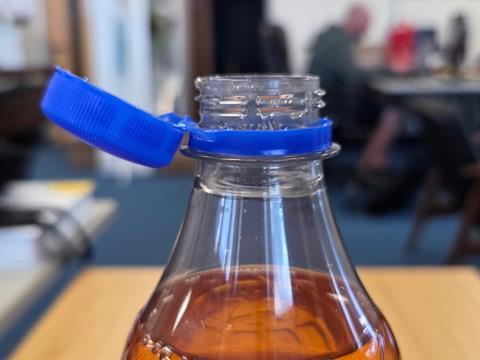
Tethered bottle caps are a hot topic once again. One of our journalists has taken a closer look at the controversy through a consumer lens, but The Guardian posits that the controversy reflects a broader accusation in EU politics: overregulation.
Author Alberto Alemanno writes that the reaction of global brands – introducing tethered caps for European consumers but letting the lid fly free in other regions – mirrors two schools of thought among politicians. Is the EU burdened by its own legal complexity, to the point where it struggles to compete with other markets? Or are its strict rules the very factor that sets it apart?
Alemanno posits that even the Draghi report couldn’t substantiate the idea that Europe is tangled in its own red tape. Conversely, he argues that the growing push for simplification instead plays into the hands of US tech oligarchs and their ambitions to control global markets. I’m sympathetic to this view.
I’d be interested to know whether packaging professionals would co-sign the article’s claim, attributed to the OECD, that the regulatory burden on businesses is not significantly higher than it was fifteen years ago.
In any case, the wave of regulatory pressure shows few signs of slowing down around the world as well as in Europe – and whatever the instigators of this culture war have to say, no amount of fearmongering will stop a shipment of non-compliant bottles from being turned away at the border.
That said, the Australian government has just deferred its legislation, until after the next federal elections, that would have implemented a national EPR scheme, placing the domestic recycling sector in real jeopardy. A reminder that a populist opposition to environmental regulation can have teeth, if we need an example beside the Trump administration.
My colleague concludes that the issue isn’t with the tethered cap itself, but with the earliest designs that failed to account for the consumer’s experience: sharp edges, resealing issues, insufficient space for the nose and lips, et cetera. To extend Alemanno’s metaphor, I think the same is true of EU regulation.
Framing sustainability laws as ineffective benefits the bottom line of those who value profit over environmentalism. But legal text can be tweaked to balance both values, however bureaucratic that might be in practice.
It’s much harder to revoke the influence of bad-faith actors once they infiltrate our system, and I’d urge European policymakers to stand firm against forces that want to dilute our progress for their own ends.
If you liked this story, you might also enjoy:
The ultimate guide to global packaging sustainability regulation in 2026
PPWR timeline: the key dates to know




















No comments yet