





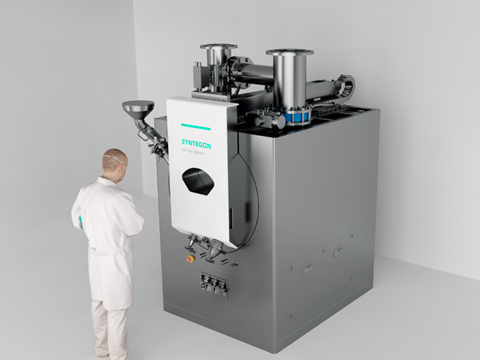
Syntegon has expanded its Oral Solid Dosage (OSD) processing range with the Sepion 75, a pilot-scale tablet coater designed to support manufacturers and CDMOs in handling growing product diversity, smaller and more variable batch sizes, and stricter containment requirements for highly potent active ingredients.
The new tablet coater enables flexible batch processing covering batch sizes from 10 to 100 percent of the maximum working volume. Syntegon says two interchangeable drum sizes within a single machine cover batch volumes from 8 to 75 litres, supporting early development batches and advanced pilot runs without requiring process parameters to be redefined, enabling flexible production planning and reducing downtime during product changeovers.
The company states that the optimized drum geometry and advanced spraying system improves process air usage and allows for shorter processing times. The automatically adjustable spray arm maintains the ‘optimal spray position’ for different filling levels and makes the Sepion 75 suitable for demanding applications such as functional coatings.
The Sepion series features closed material handling during filling, sampling, and discharge, minimizing manual intervention. Syntegon adds that containment up to OEB5 is an option for all Sepion coaters through split valves, safe-change filters and extended cleaning configurations aiming to improve operator safety and reduce contamination risks while supporting compliance with current pharmaceutical manufacturing requirements.
Last year solid dose packaging company Aylward Enterprises aimed to provide ‘100% count verification and reject-on-the-fly performance’ for pharmaceutical, nutraceutical, and healthcare packaging lines with its TCM Tablet Counter, said to feature patented product counting technology and advanced vision inspection. The company states that the TCM has an integrated camera system that verifies 100% of product counts while detecting and rejecting chipped, broken, or colour-discrepant tablets in real time, without interrupting production.
At the start of this year, ACG Packaging Materials introduced SuperPod, its cold-form blister technology believed to downsize blister cavities by up to 39% and use less material per pack. The technology is expected to cut down on material and resource consumption per dosage.
If you liked this story, you might also enjoy:
The ultimate guide to packaging innovation in 2026
Packaging and Packaging Waste Regulation: what to know in 2026
Everything you need to know about global packaging sustainability regulation
Strategic learnings from the Sustainable Packaging Summit















No comments yet